
Find Who Owns a Powhatan Property
Start with the ground, not the name. A Powhatan County property search works best when you move from location to tax map, then to the owner field, then to the deed that recorded the transfer. The county's annual assessment books are searchable PDFs. The public GIS viewer helps you locate the parcel and its parcel number. Neither source settles the question on its own. Only the recorded deed names the grantor and grantee. It also gives the recording date and ties the legal description to the transfer. The same route works for a house, family land, or a parcel held in an LLC or estate name.
- Locate the address in CivQuest or the assessment-by-map book and copy the complete tax-map number.
- Search the 2026 assessment-by-owner PDF for the name or entity and verify the parcel row.
- Record Owner, Co-Owner, Record #, acres, district, and market fields as printed.
- Use the Circuit Court Clerk’s index to find the newest recorded deed for that land.
- Compare the parties, date, map reference, and legal description before treating the record as current.
The 2026 book shows the exact assessment columns the Commissioner publishes each year. For deeds, the Clerk's local agreement covers remote index and image access. That access begins with records from 1976. An index result points you to the filed instrument. It does not prove the parcel is free of later claims. Finish at the deed itself.
Where Powhatan Names an Owner
Ownership shows up in more than one public record, and each source answers a different question. The Commissioner's assessment book is the tax-roll view. The Clerk's deed records the transfer itself. GIS maps the parcel, while the Treasurer holds the tax bill and payment account. The 2026 assessment publication includes Owner and Co-Owner fields. Its PDF header publishes no mailing address, situs field, last-sale field, or full value history.
| Source | What the owner search gives | How current it is |
|---|---|---|
| 2026 assessment by owner | Owner, co-owner, map, Record #, acres, district, market fields | Annual publication; no fixed post-sale lag stated |
| Circuit Clerk deed index | Recorded grantor, grantee, instrument, date, book/page or reference | Use newest recorded transfer; remote deed coverage begins 1976 |
| CivQuest GIS | Parcel location and map context | Dynamic viewer; exact update date not captured |
| Treasurer account | Bill, payment, and delinquency status | Current account held by Treasurer, not ownership proof |
The 2026 assessment-by-map source shows the county’s data layout at a high level.
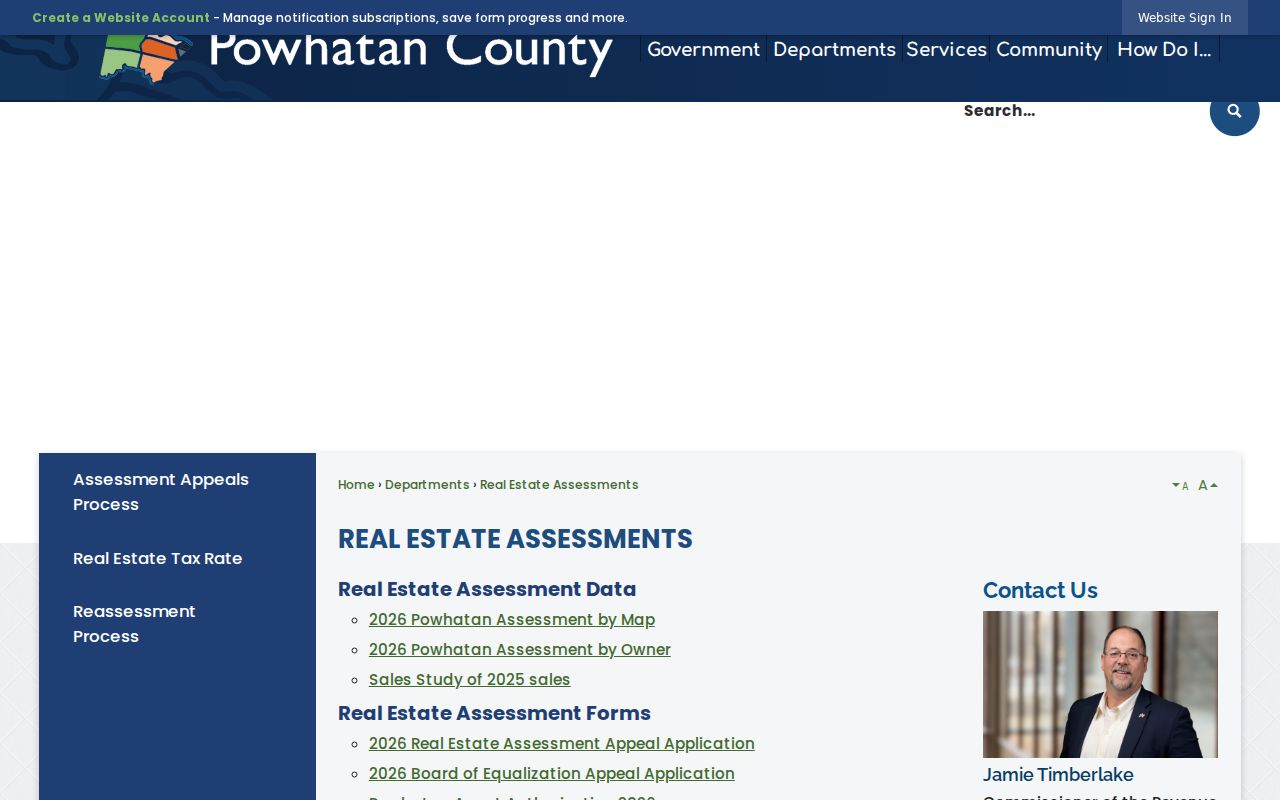
The published book is a strong owner lead. The land record remains the document that proves a transfer.
Match a Name to Powhatan Land
A name-only search can return several tax-map rows or nothing useful. Powhatan assessment books list more than individuals. They also carry co-owners, LLCs, trustees, estates and executors, churches, cemeteries, and Commonwealth property. Search the exact printed form of the name. For a trust or estate, add the trustee or fiduciary form. Then work the deed index. Match the legal description to the land you started with.
An assessment owner is simply the name on the tax record. It is not an occupancy listing. The book keeps separate Owner and Co-Owner columns, which can split a joint holding. Initials or suffixes can change how an index sorts a party. Cross-check with the tax-map number and Record #. When an LLC shows up, Virginia's SCC Clerk's Information System can clarify its filing identity. That SCC record still does not replace a real-estate deed in Powhatan County.
Powhatan Owner Record Timing
A deed can move faster than the assessment book. Powhatan's public pages give no fixed lag between recording a deed and updating the tax roll. That gap is structural. The Clerk records instruments, while the Commissioner publishes the assessment books, and each system answers a different question. Timing matters here. Compare the deed's recording date against the assessment year, and ask the Clerk about the newest instrument on the parcel.
A matching name proves little. Sales, trust transfers, probate deeds, corrective deeds, and parcel splits can all delay a roll update or change the party string. Use the tax book to find the parcel. Use the deed to confirm. The tax book names the reported owner; the deed settles it. The current owner record route pairs the latest owner-of-record entry with the newest deed so nothing gets skipped.
Powhatan Deed Alert and Filing Notices
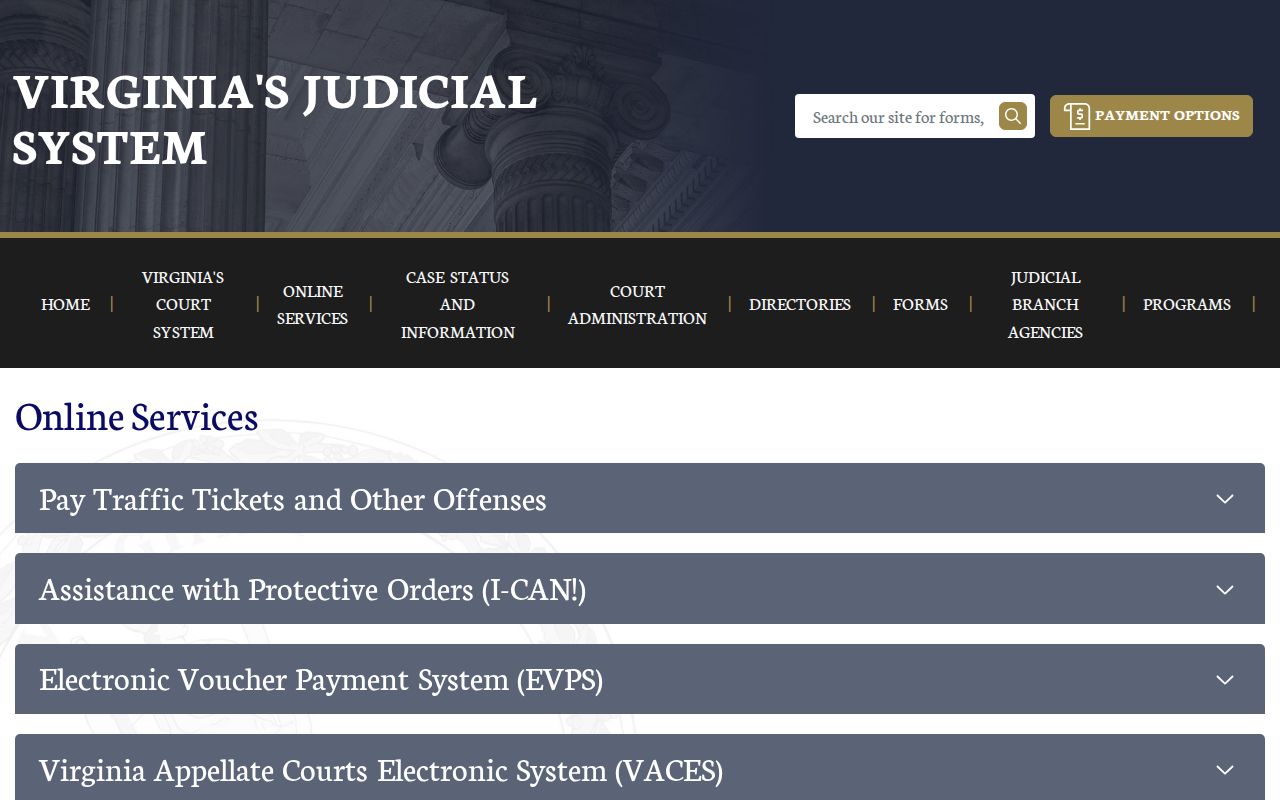
Virginia Courts lists VA Deed Alert as a free service. It sends a notice when a document bearing a name you choose is recorded. Powhatan publishes no local signup screen. Treat an alert as a lead. It cannot stop a filing. Nor does it prove the document is valid or complete. When a notice arrives, confirm the instrument with the Powhatan Circuit Court Clerk. Do this before drawing any conclusion. The Virginia Courts online-services page describes the alert service alongside other state tools.
Ask the Clerk before relying on any notification option. Powhatan's own pages say little about local activation. A name alert has limits. It may miss a spelling variant, or it may surface a filing that needs context you do not have. It is no substitute for a deed search, so keep the instrument number and recording date handy when you ask the Clerk to review a notice.
Powhatan Owner Address Fields
A situs address tells you where the land sits. A mailing address tells you where the owner gets mail. The two can differ in Powhatan County. The published assessment book lists no separate situs and mailing columns. An owner of record may list a post-office box. The owner may list an address in another county instead. A business address can also appear. So the name on the tax roll may belong to someone else. That person may never live on the parcel. A postal label that reads Powhatan does not guarantee the land sits inside the CDP boundary, either.
- Owner of record
- The owner name shown in a particular official record.
- Grantee
- The party receiving a property interest in a recorded deed.
- Title
- The legal interest in land, which a name search alone does not certify.
- Situs address
- The property’s physical address or mapped location.
- Mailing address
- The address used to send a tax notice or other mail.
A parcel record can miss the address field you want. When that happens, ask the Commissioner whether the official parcel record may be reviewed in person. Keep any personal contact lawful, and honor the confidentiality rules that protect restricted Powhatan County property records.
Powhatan Property Owner Entity Names
Powhatan County property records keep owner names exactly as the legal papers spell them. The assessment books do not translate an entity into one person. A church or cemetery can sit in the owner field. A government parcel may show the Commonwealth. A trust names its trustees. An estate row may list an executor. So search the name as printed. Weigh the fiduciary or entity name shown in the deed. For a corporation or LLC, the Virginia SCC search will surface a registered agent or status. Yet only the land instrument proves the recorded conveyance. Probate and land-record functions share one roof at the Circuit Court Clerk. An estate transfer often appears in both a will file and a later deed. That matters. The assessment roll may lag behind the estate's transfer. An estate name alone does not tell you who holds authority today. Confirm the recorded deed yourself. Then ask the Clerk how to reach an older probate record.
Older Powhatan Owner Records
Powhatan deed records go back to 1976 through the county's remote index. Older ownership lives elsewhere. The Library of Virginia catalog points to general deed indexes from 1777 through 1947. It also lists deed books, release books, and plat indexes. A chain may start before the local digital run. That kind of chain may require an archive or courthouse visit. Start with the newest deed and work backward. Guessing from a historic family name, without tying it to a parcel description, leads nowhere. The full route is laid out in the Powhatan former-owner chain process. A release-deed book helps you check an old mortgage. A plat index can identify lot plans. The tax map links the current parcel to historic land descriptions. An index range may have a gap. In that case, ask the Clerk or the Library of Virginia about the volume. Do not assume the record never existed.
Limits of a Powhatan Owner Search
A public owner name has sharp limits. It does not show who lives at the property. It does not show who holds the keys. It does not show who may use the land. It is not a title opinion either. Powhatan County property records can expose public names and parcel details. Yet the assessment roll may lag, and the GIS map is no survey. Verify any transaction with deed references and land descriptions. Bring in a title professional or surveyor when a legal conclusion is at stake.
Use owner information lawfully. A tax-roll name is a research lead, not proof of title or residence. Do not use Powhatan owner records to stalk, harass, threaten, or target anyone.
Virginia shields certain records from public view. Protected voter addresses and restricted vital records are two examples, so public availability has limits. If a name or address looks sensitive, follow the custodian's rules. Never republish it for harm. For a recorded document, contact the Clerk. For an assessment field on the Powhatan tax roll, contact the Commissioner.