
What Powhatan Property Value Means
Three numbers answer three questions. The assessment is the Commissioner's tax value for a given year. A sale price is what a transaction actually reported. Market value is an estimate of what a parcel might command under current conditions. These figures can sit close together. They are still not interchangeable. The county's 2026 assessment books list Market Land, Market Improvement, and Market Total, while the deed record supplies the instrument type and legal description for the sale. Reading a Powhatan County property value correctly starts with knowing which of those three numbers you are looking at.
| Value type | What it means | Where Powhatan records it |
|---|---|---|
| Assessed value | County value used for the real-estate tax year | Commissioner’s annual assessment book |
| Market estimate | Mass-appraisal estimate tied to the assessment process | Assessment fields and ratio materials |
| Last sale price | Price or consideration associated with a transaction | Recorded deed or sales study, where available |
Powhatan County states that real property is assessed at 100 percent of fair market value under Virginia Code §58.1-3201. That standard does not turn an assessment into a signed offer or a private appraisal for a planned sale. The figure carries a tax-year context, so match it to the right parcel and the right year before drawing any conclusion from it.
Where Powhatan Value Is Recorded
Two publications anchor public value data for Powhatan County. The 2026 assessment-by-map and assessment-by-owner books are the main sources. The map book lists Tax Map #, Owner, Co-Owner, Record #, and Acres. It also shows Magisterial District, Market Land, Market Improvement, Market Total, and Class. The 2025 owner and parcel publications give a prior-year check. All are downloadable PDFs rather than a complete live sale-history portal. The book header carries no last-sale field or full value history. The county's assessment page links current and prior publications. It also carries appeal forms, ratio summaries, and sales materials.
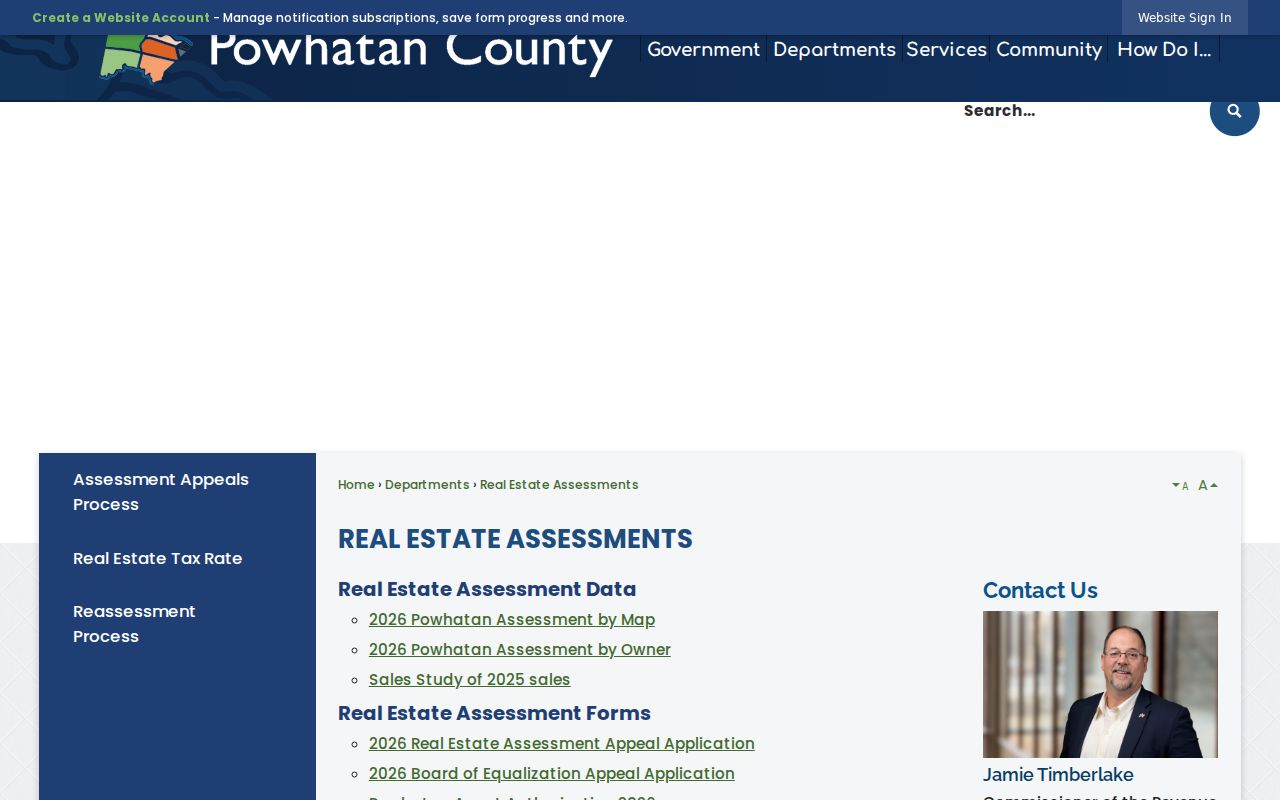
The assessment hub gathers the annual books and comparison material, but each document answers a different value question, so match the document to the question before comparing numbers.
Land and Improvement Values
Each assessment row in Powhatan splits Market Land from Market Improvement and Market Total. The split matters. A change can come from the land estimate, the building component, or both at once. Acreage, class, district, and map number confirm the row belongs to the correct parcel. Compare the same fields across 2025 and 2026 before explaining a shift. Do this especially if a subdivision, correction, or recombination changed the tax map. A low or nominal figure can be legitimate. Cemetery parcels and Commonwealth-owned land often carry small values by class. Do not assume a small number is an error. Read the Class column. Contact the Commissioner when a value or parcel description looks wrong. The public PDF is the published roll, not every internal worksheet the assessor uses.
- Assessed value
- The county’s recorded tax value for a stated year.
- Market value
- An estimate used in assessment, not an offer or guaranteed sale outcome.
- Assessment ratio
- A comparison of assessed amounts with qualifying sale prices.
- Sale consideration
- Transaction value or terms shown in a recorded instrument where stated.
- Reassessment
- The county’s periodic process of reviewing parcel values.
Powhatan’s Assessment and Sales Ratio
An assessment/sales ratio compares an assessed amount with a qualifying sale price. Powhatan links local ratio summaries, and Virginia Tax publishes statewide studies. County assessors compare sales and property traits as part of a mass-appraisal method. A ratio can show how assessments line up across a group. It cannot set the value of one parcel. That would require weighing size, condition, class, improvements, and timing. Virginia's ratio-study material offers useful context. A median ratio below 100 percent may reflect market growth since a revaluation. A ratio near 100 percent often follows a recent reassessment. Treat these patterns as background, not as a multiplier for predicting a sale. A deed can report a price that differs from the assessment. The sale may have closed on another date or under different conditions.
The 2026 Powhatan Reassessment
Powhatan County says annual reassessment began in 2022. It names 2026 as a general reassessment year. In-house assessors reviewed physical characteristics and sales. The 2026 book's market fields are the current published value reference for that tax year. A sound comparison uses the 2026 row and its 2025 counterpart. The county's 2025 sales study matters too. An older web estimate does not. Reassessment does not lift every parcel by the same amount. Acreage, improvements, land class, and comparable sales differ across Powhatan. The county's appeal page describes how owners may submit market data or show unequal treatment. Deadlines tied to the 2026 cycle have passed. Later appeals need the next county calendar. The county's reassessment explanation describes the annual cycle and the fair-market-value standard.
Sale Price Versus Powhatan Assessment
An assessment and a sale price answer different questions. The assessor sets a figure for a tax year. A deed records what one buyer actually paid. The recorded deed names the parties, the recording date, the consideration, and the land description, while the public assessment PDF shows no complete last-sale field. Anyone trying to confirm a price should search the Clerk’s recorded deed and the county’s sales-study material instead. The 2025 sales study supplies assessment context, and the accompanying ratio materials explain how qualifying sales are compared with assessed values.
Not every sale makes a clean comparable. A family transfer, unusual terms, or a changed parcel can distort the picture. For a purchase decision, rely on a licensed appraiser or another qualified professional. The county tax roll is not an appraisal report.
Tax Rate Is Separate from Value
Valuation and the tax rate are separate functions, according to Powhatan’s tax rate page. The current rate for calendar 2026 is $0.77 per $100 of assessed value. The first half came due June 5. The second half is due November 5. The Board of Supervisors sets the rate each spring. A shift in the bill can stem from the assessment, the rate, or account-specific adjustments, so weigh both inputs for the relevant year. For the calculation and billing dates, the county’s real-estate tax rate page is the source to check.
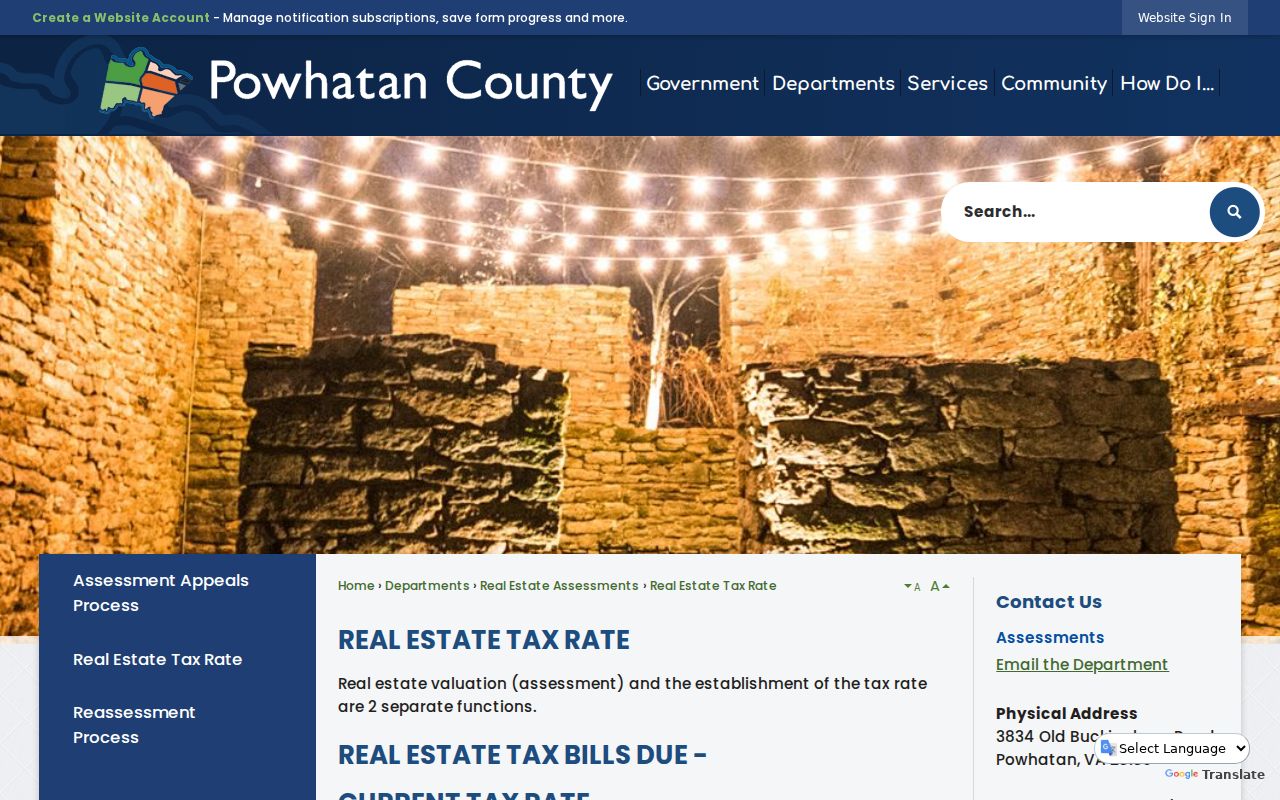
The 2026 rate is not a property valuation.
Appealing a Powhatan Value
Powhatan owners who dispute a value have two routes. One is a reassessment-office review. The other is the Board of Equalization. Under the 2026 process, an owner had to show the assessment exceeded fair market value. Uneven treatment counted too; an assessment not uniform with similar properties also qualified. Owners also held a right to view the records behind the land and improvement values. They could copy those records as well. The application was parcel-specific. Supporting market data was required. The 2026 deadline to email or mail a reassessment appeal was May 1. The hard-copy BOE application deadline was June 1. By September 2026 both dates had passed. Check the county’s page for next year’s schedule and current forms before filing.
Bills and appeal steps get separate treatment on the Powhatan tax-record page. Value interpretation stays a separate matter.
Value is not a sale quote. An assessed value is used for taxation and is not what the property would necessarily sell for or an appraisal for a buyer.
Limits of a Powhatan Value
An assessed value in Powhatan is a tax record tied to a year, a method, and a parcel number. It guarantees no market price, current condition, clear title, or boundary. The market fields can guide a rough comparison. A value driving a sale or estate decision, though, may still call for a licensed appraisal. Deed prices can reflect terms no model captures. Keep the Tax Map #, Record #, tax year, and land-and-improvement split together when comparing entries. If a value is disputed, verify the sales evidence. Check the ratio method with the county or Virginia Tax. A GIS map line is not proof. It shows neither correct valuation nor an exact boundary.
Assessment limits. Use the county value to understand the tax roll, then verify sale, boundary, and title facts through their own official records.