
Trace Former Powhatan Property Owners
A backward chain starts from the newest deed you hold. That deed's grantee becomes the next grantor you hunt for. Every transfer must match one tract. Under Powhatan County's local remote agreement, the deed index and images run from 1976 forward; anything earlier takes you to Clerk books or Library of Virginia microfilm. The table shows what evidence to record at each transfer. Never guess at names or dates.
| Transfer point | Grantor to grantee | Document clue | Where to verify |
|---|---|---|---|
| Most recent | Prior owner to current grantee | Recording date and legal description | Circuit Clerk index/image |
| Prior conveyance | Earlier grantor to prior owner | Same land description; older book/page | Grantor-grantee index |
| Pre-1976 link | Earlier parties in a deed book | Index volume and deed-book reference | Clerk or LVA microfilm |
| Historic parcel origin | Earlier owner under older place or road name | Plat, release, or land-description clue | Historic index and plat books |
Record the instrument reference and the next name before stepping farther back. Names shift between deeds: a trust, estate, spouse, LLC, or initials can change the form from one instrument to the next. The legal description settles it.
Walk the Powhatan Chain Backward
Powhatan's party index splits entries by grantor and grantee. Start with the current grantee. Search that name for an earlier deed; its grantee points one step deeper. Repeat the cycle, deed by deed. This builds time depth rather than a single assessment check or one copied record. When a deed mismatches the land, stop and resolve it before attaching anything older to the parcel.
- Start with the newest deed and copy its date, parties, book/page or instrument number, and full description.
- Search the grantor index for the current grantee to locate the preceding conveyance.
- Read the earlier deed and identify the prior grantee, then check that party in the next earlier span.
- Compare lot, acreage, calls, roads, adjacent owners, or plat references at every handoff.
- When the year predates remote access, use the historic index and ask for the matching deed book or reel.
- Grantor
- The party who conveyed the interest.
- Grantee
- The party who received it.
- Chain of title
- The recorded sequence of transfers for a tract.
- Reverse index
- An index approach that follows a grantee back to an earlier grantor or transfer.
- Quitclaim and warranty
- Different deed forms; read the instrument’s language rather than inferring the scope from its label.
Why Powhatan’s Remote Trail Starts in 1976
Powhatan County's remote-access agreement sets online deed index and image coverage from 1976 to the present. That is a practical boundary, not history. Land recording here began long before. SRA/COVERS, the state-linked remote system, separates public index access from subscriber images in its published materials. When a chain crosses 1976, move to the Clerk's land books or the archival catalog instead of re-running online searches with new dates. The county's agreement is the local word on coverage. The state's SRA page explains that arrangement.
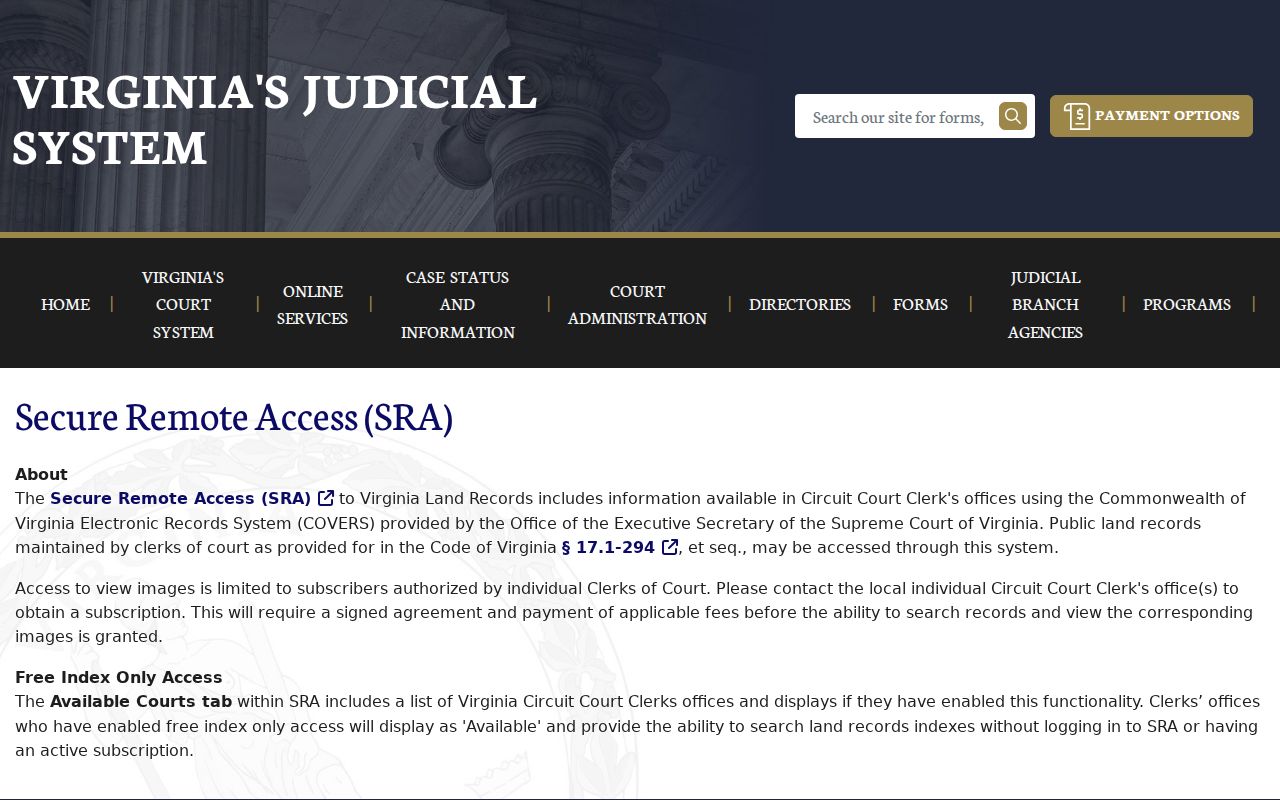
Online access covers only the modern stretch of the chain. Older book and microfilm references carry the search the rest of the way back.
Powhatan Indexes Reach to 1777
The Library of Virginia catalog lists a Powhatan General Index to Deeds covering 1777 to 1947, with grantor and grantee runs plus later supplements. The county itself was created in 1777. A courthouse followed in 1778 near Scottville. In 1850, part of Chesterfield County was annexed. That change fixed the modern boundary. Confirm the place and land description on any pre-1850 deed rather than assuming today's locality label applied.
The catalog is a finding aid, not a single property-search box. It names the index run. From there a reel search locates the instrument. A stubborn chain may need the Clerk's original books or the Library of Virginia's help with reel access. When a name index stalls, test the land description, subdivision reference, and party variants. Early spellings wander. The official Powhatan microfilm catalog lists the deed indexes and supporting land-record series.
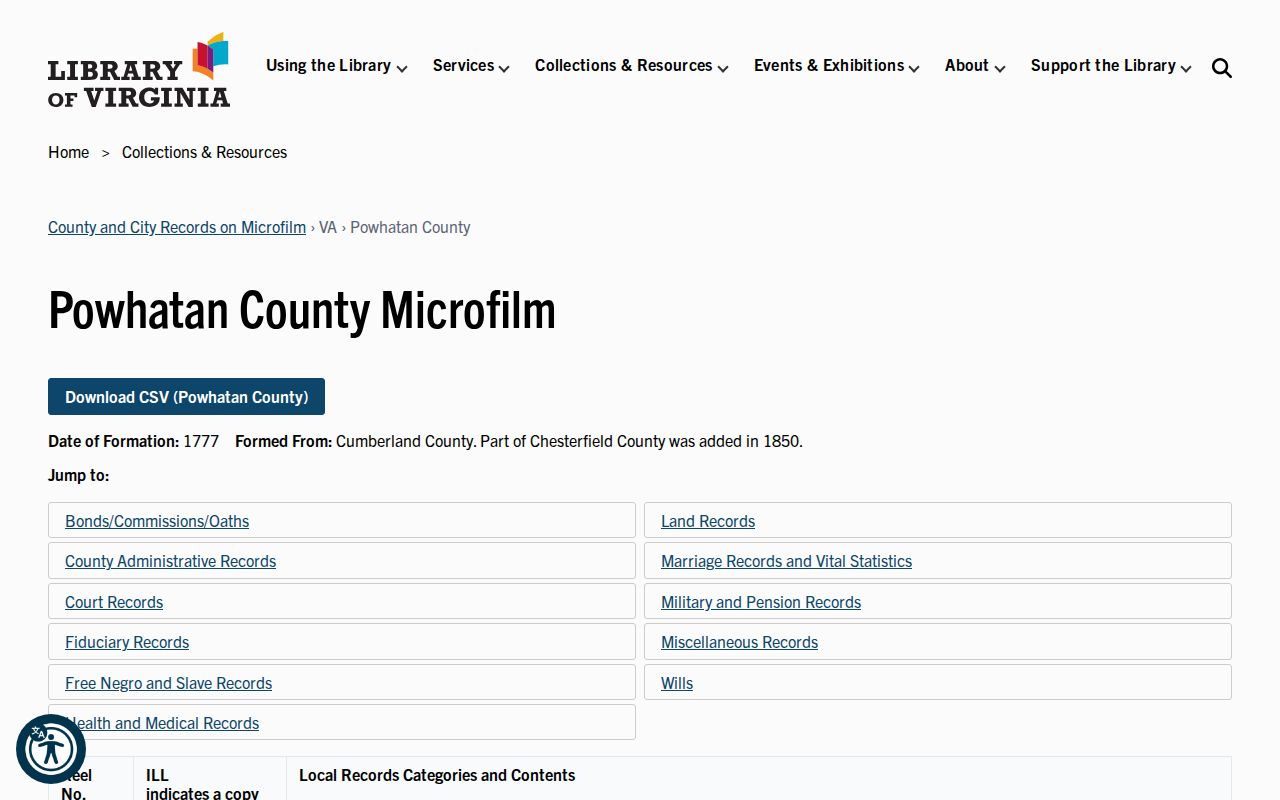
Its historic index spans a much earlier period than the county’s remote deed system.
Old Releases and Mortgage Links
An old deed chain holds more than former owners. A prior deed of trust can carry a later release, satisfaction, or assignment. The Library of Virginia catalog lists Powhatan release deed books from 1884 to 1966 across several volumes. Those volumes show whether an earlier mortgage instrument was followed by a recorded release. They are not a full lien report. Match every result to the land and the parties.
When the chain includes a debt instrument, write down the book and page, secured party, trustee, grantor, and legal description. Then hunt the release under the right party or instrument reference. A missing index result proves nothing. A lien can hide behind a name variant. Ask the Clerk about other volumes. The official Circuit Court page gives the local land-record contact.
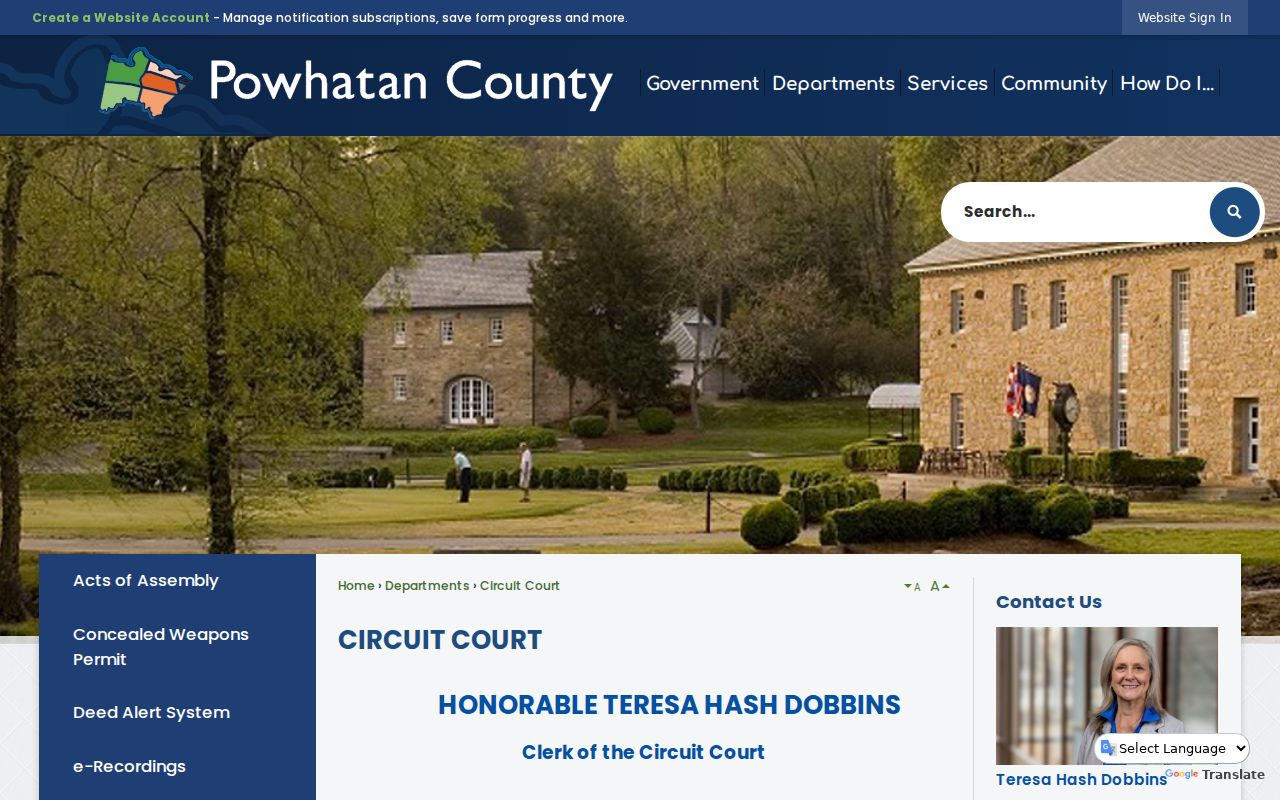
The Clerk’s contact page identifies the local custodian for land-record follow-up.
Plat Indexes and Lot Changes
Old plats explain why a later deed names a subdivision lot instead of a broad acreage tract. The LVA catalog lists plenty. A General Index to Plats covers 1870 to 1955. A Plat Book runs 1886 to 1939. Additional plat ranges stretch from 1820 through 1981, plus an undated 1911 group. Use the index to find the plan. Then compare the plat's lot, section, road, and acreage against the deed description and the modern tax map.
Powhatan's 2020 planning report names later sections like Scottville Section 5, Erin Hill Section 1A, and Walnut Creek Section 6. The report adds case and lot context. The recorded plat is the legal map record. A later parcel split can change the tax-map suffix without touching the older deed's wording, so carry both descriptions through the search.
Estate Names in Former Owner Records
A death in the ownership line changes the paperwork. Instead of one owner signing to another, the recorded instrument may name an executor, administrator, trustee, or estate. It may instead name a trustee or the estate itself. Powhatan's Circuit Court Clerk holds probate and land records together. That combination helps. The remote agreement covers wills and estates from 2003 forward. Earlier books require a courthouse or archival request. A will file and a deed remain distinct records. Track whichever instrument actually moved the real-estate interest.
Treat the assessment owner entry as a clue rather than proof. The annual book may display an executor or estate string. The deed or court order carries the transfer details. When names shift, compare the land description, parcel map, recording dates, and the fiduciary capacity named. Keep every intermediate instrument tied to the same tract before calling the chain complete.
Powhatan Place Names and the Chain
Powhatan County’s courthouse community began as Scottville. The government center is now tied to Courthouse Village or Powhatan itself. Older deeds can carry that earlier place name or an old road reference instead of a modern mailing address. The 1850 Chesterfield annexation was a county-boundary change, not a municipal one. Even so, it can still matter. It affects which locality to pick in a broad archive. It also affects how to read older land records.
The county history page records the 1777 creation. It also notes the 1778 courthouse and the 1850 boundary shift. Treat those dates as wayposts for an archive request. They do not prove that a specific parcel moved or changed hands. The deed chain, plat, and legal description remain the real evidence for one property.
How Far Back Powhatan Ownership Goes
Powhatan County deed coverage splits into two channels. The earliest general deed index reaches back to 1777. The local online index starts in 1976. That gap does not mean the years between went unrecorded. It simply means the search channel changes. Older names and land descriptions live in the Clerk’s books and the Library of Virginia’s microfilm holdings. Powhatan saw no courthouse fire or confirmed loss of land records, so resist guessing at a catastrophe when an index trail runs thin.
Mark the modern limit with the county agreement, then use the LVA catalog to pick an earlier book or reel. Keep the request tight. Give a narrow date span, a party name, and a land description. When a prior deed cites an adjoining owner or an old route, save that detail as a clue. Link each step of the chain by legal description or plat. A familiar surname alone is not enough.
Coverage change. Powhatan’s remote deed index starts in 1976; the verified historic general index runs 1777 to 1947 and requires a different access route.
Former Owner Search Limits
A chain holds only as well as the records that join its steps. A deed index can miss a spelling variant. One modern parcel may combine land conveyed under separate earlier descriptions. Assessment books help you find a current map key. But they cannot rebuild the legal history. A transfer that moved through probate or a trust may require another record from the Clerk’s combined files.
Need the present owner of record? Start with the newest assessment record and the latest deed. For a particular deed copy, follow the Clerk’s request route. A title professional can judge whether the documents support a legal conclusion. This kind of search suits property research, estate context, and land history. Never use former-owner names or addresses to stalk, harass, or harm anyone.
Not a title opinion. A historic deed sequence helps explain recorded transfers. It does not certify that title is clear or that every off-record interest has been found.