
Powhatan Tax Records by Field
No single number tells the whole tax story in Powhatan County. The Commissioner of the Revenue keeps the assessment record. The Treasurer bills and collects the tax. The 2026 assessment-by-map book is the clearest field inventory of a parcel, while the Treasurer page lays out the two payment halves and their due dates. Always copy the tax year beside every amount you pull.
| Field or record | What it shows | Where it is kept |
|---|---|---|
| Owner / Co-Owner | Names carried in the annual assessment book | Commissioner of the Revenue |
| Tax Map # and Record # | Parcel key and separate assessment identifier | Assessment by map or owner PDF |
| Market Land / Improvement / Total | Value components for the tax year | Assessment book |
| Class, acreage, district | Tax classification and location context | Assessment book |
| Bill, receipt, amount due | Charges, credits, and payment status | Powhatan County Treasurer |
The county publishes its assessment books through the real-estate assessment page, which organizes the 2026 volumes by map and by owner. The 2026 map book alone runs 309 pages. Alongside it sit the 2025 owner and parcel publications, giving researchers a couple of ways to browse Powhatan County tax records without a parcel number in hand. The county assessment page also carries appeals material.
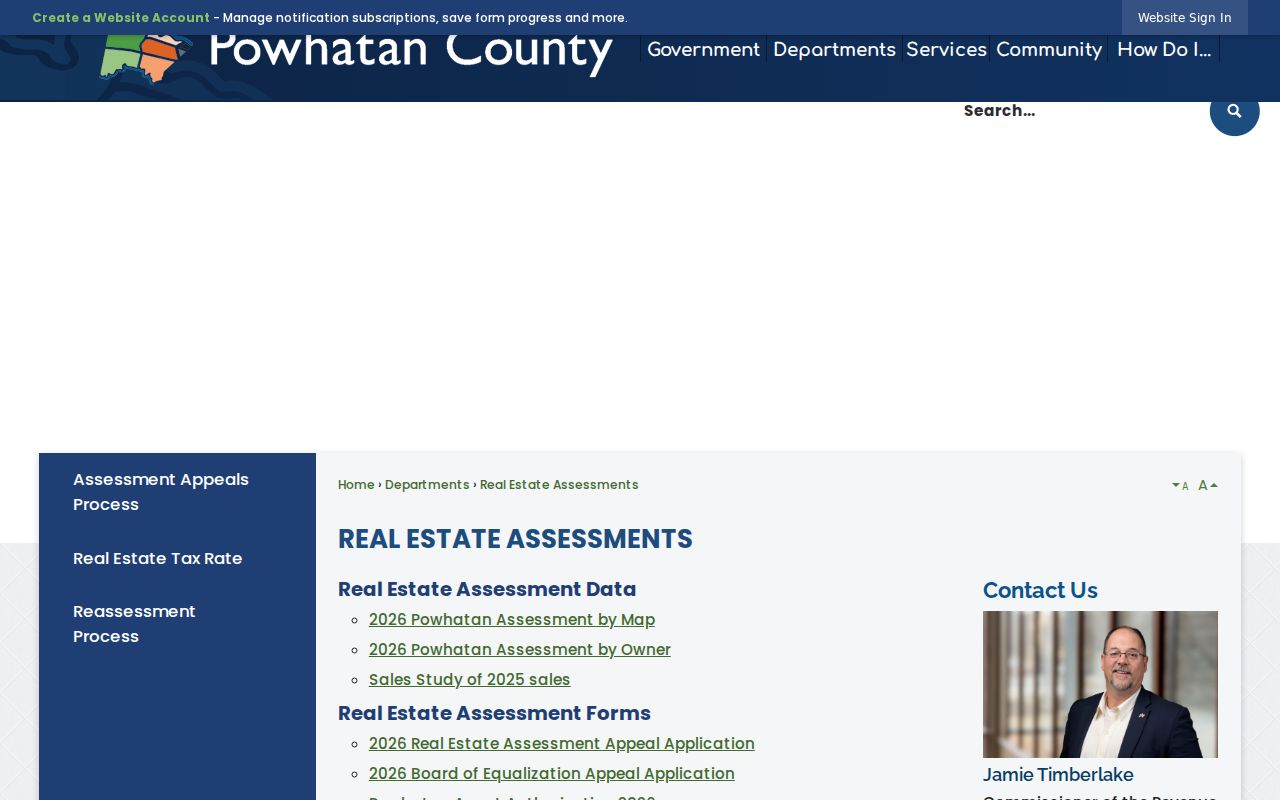
Pick the year and sort order at the assessment hub first. Then carry your parcel key over to the Treasurer.
Find a Powhatan Tax Bill
For the bill itself, the Treasurer owns the answer. An assessment PDF shows value fields, never the amount currently due. Powhatan County posts a link for online payment. It takes in-person, mailed, and drop-box payments too. The public payment form is not text-readable. So open the live route to see the exact account search fields and any portal fees before you rely on it.
- Find the parcel in the assessment-by-map or owner book and copy the tax-map and Record #.
- Open the county Treasurer page and follow its real-estate payment link.
- Check the tax year and account identity before treating an amount as the subject parcel’s bill.
- For a receipt, payment history, or delinquent balance, contact the Treasurer with the account or owner detail.
The county's Treasurer page lists payment channels, office details, and the published half-year due dates. Visit Suite D at 3834 Old Buckingham Road, Powhatan, VA 23139, or call 804-598-5625. Hours run Monday through Friday, 8:30 a.m. to 5 p.m. The Powhatan County Treasurer page names the department that owns billing and collection for every parcel.
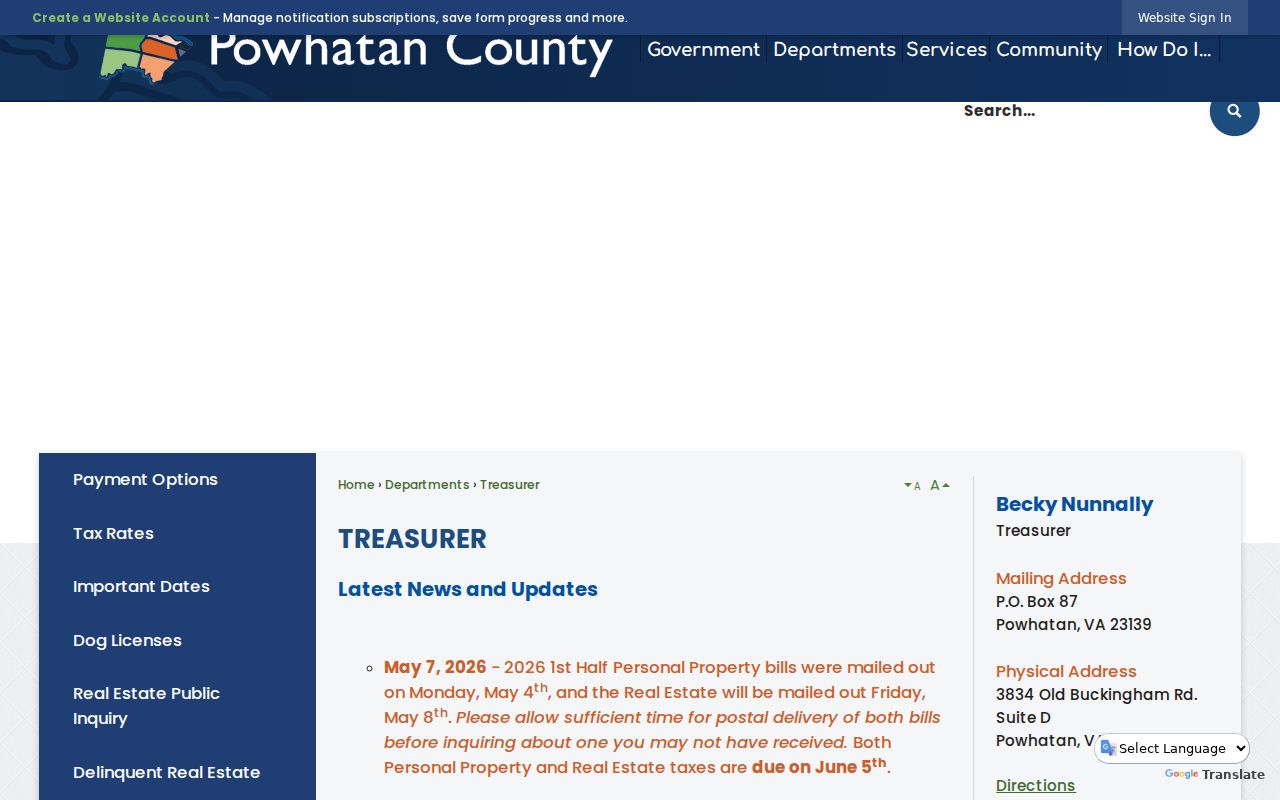
Whether a payment posted or a balance remains, the Treasurer confirms it, not the assessment office.
Assessment Is Not the Tax Rate
Powhatan County keeps valuation and the tax rate separate. Virginia Code §58.1-3201 governs real property assessment. It requires assessment at 100 percent of fair market value. The Commissioner estimates that value. Each spring the Board of Supervisors sets a rate to fund county services. That rate gets applied to the assessment to produce the real-estate tax bill. A higher assessment and a higher rate are different events. Don't use one to explain the other when a bill jumps. The current county rate page lists $0.77 per $100 of assessed value for calendar 2026. The first half comes due June 5 and the second November 5. Rates and due dates shift by year. Note the year beside any figure and check the rate page before a new cycle. The county real-estate rate page states the rate rule and the two-half billing calendar.
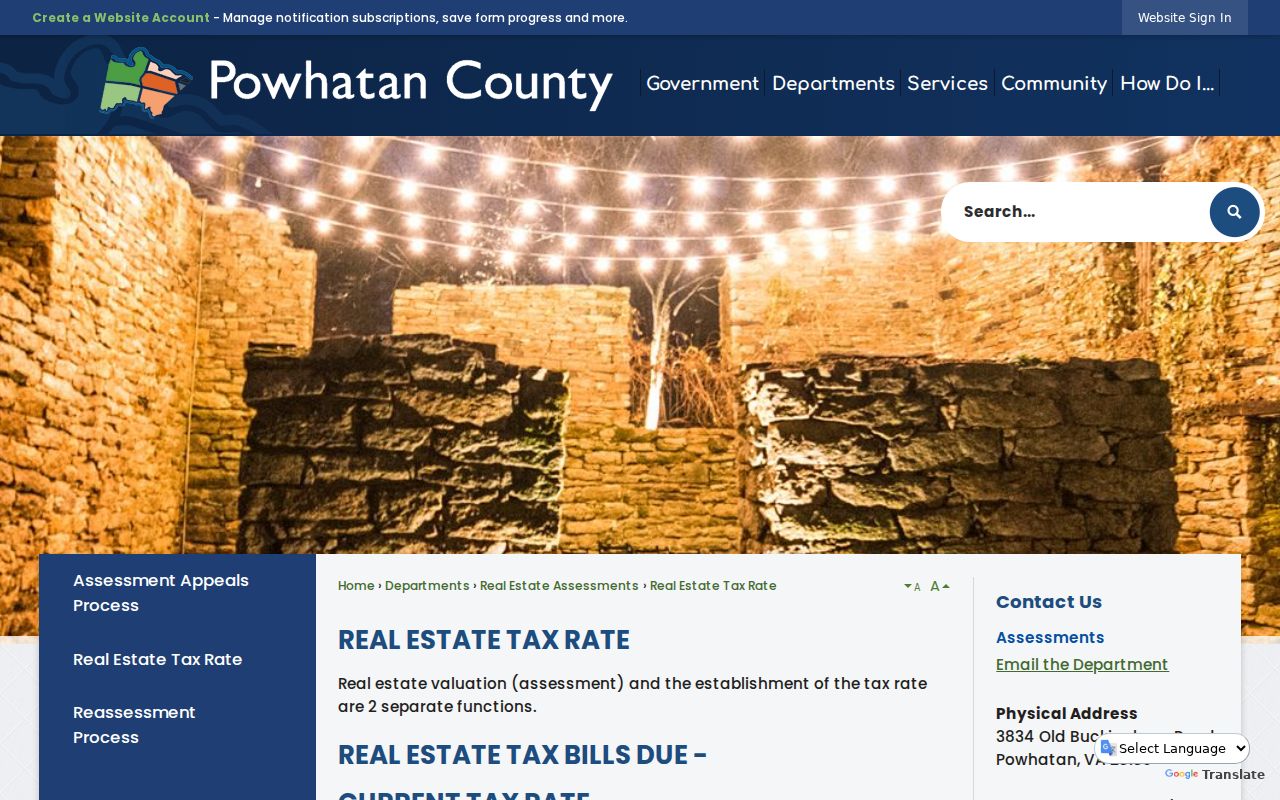
The tax rate never lives inside the assessment fields of the annual book; it is a separate input.
- Assessed value
- The county’s tax value for a parcel in the stated year.
- Market value
- The value estimate used by the assessor, not a guaranteed sale price.
- Tax rate
- The Board’s rate applied per $100 of assessed value.
- Tax lien
- A claim related to unpaid tax, which must be confirmed through the official account and recorded record.
Annual Reassessment in Powhatan
Powhatan County moved to annual reassessment beginning in 2022. It completed a general reassessment for tax year 2026. Assessors review parcel characteristics and recent sales through a mass appraisal process. Each entry in the assessment book shows Market Land, Market Improvement, and Market Total. You can see which piece drove a change. A big year-to-year shift may justify a question to the assessor. By itself, though, it signals no error. To compare fairly, pull the same map key from the 2025 and 2026 books. Check acreage, class, co-owner, and district before reading anything into the totals. The county assessment page also posts ratio studies and a 2025 sales study. Virginia Tax's assessment/sales ratio studies weigh assessed values against bona fide sales. That statewide method adds context. It never turns a ratio into a property appraisal.
Powhatan Assessment Appeal Steps
A property owner who disputes a value has two routes. One is an assessment-office review. The other is a filing with the Board of Equalization. Powhatan's published 2026 process required evidence that the assessment exceeded fair market value. It also accepted proof of a lack of uniformity with similar assessments. The owner could request a written review or an assessor hearing. Each tax parcel needed its own application with supporting market data. The county appeal page also describes the owner's right to review the assessment records behind the value. Those 2026 dates have passed. The email and written reassessment deadline was May 1, 2026. The hard-copy BOE application deadline was June 1, 2026. Hearings were listed in May. Treat them as history, not a calendar. Before drafting an appeal, recheck the Commissioner's page for the next tax year's deadlines. The assessment appeal page links the current forms and explains the evidence to attach.
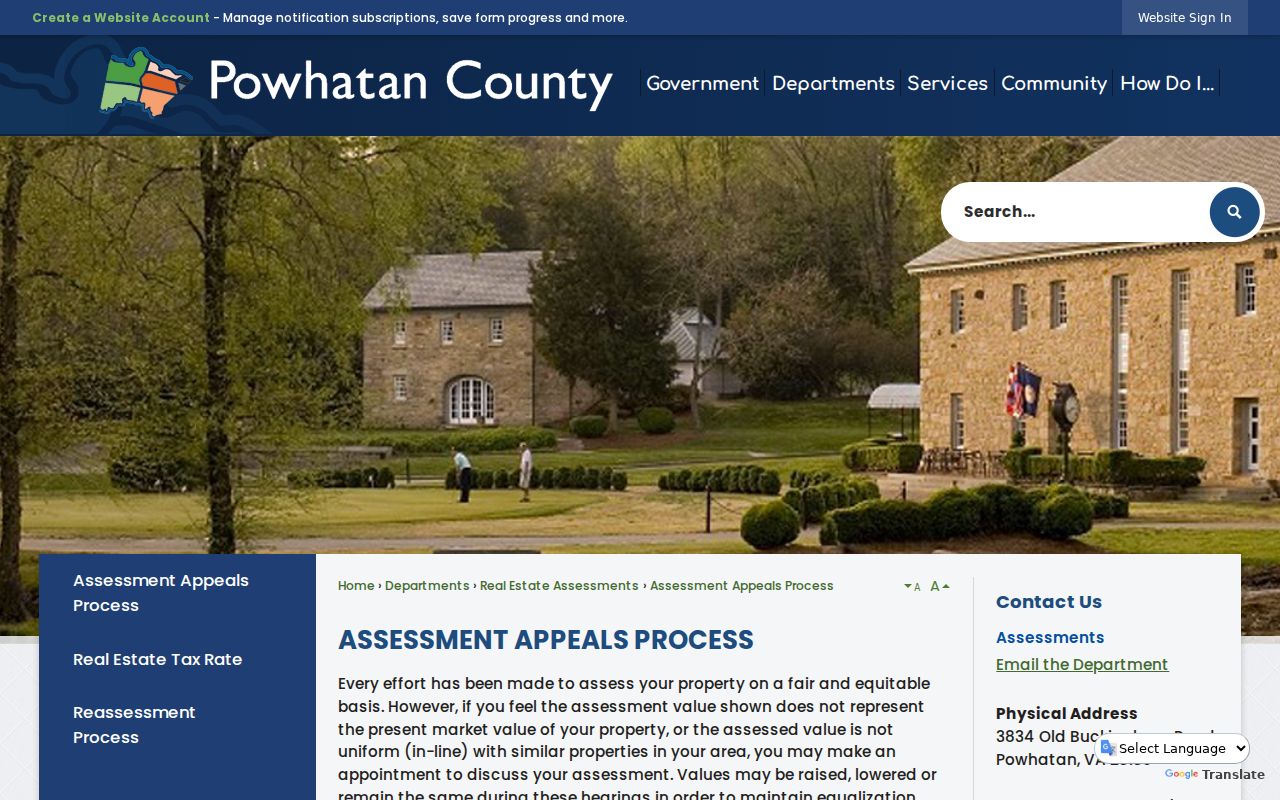
Any appeal cycle you see reflects dated deadlines, so confirm the next published dates before acting.
2026 appeal calendar. The 2026 May and June deadlines are historical as of September 2026; check the county page for the next open filing window.
Administrative Corrections and Evidence
A factual error and a value disagreement are not the same thing. The county appeal page draws that line clearly. A wrong map number, acreage, class, or ownership string is a correction. In that case, contact the Commissioner and ask how the assessment fact gets fixed. A value dispute works differently. Compare assessments of similar property with bona fide sales. Then explain how your parcel differs or why its market value sits lower. Owners may review and obtain copies of the records used in the assessment determination.
Build the file before arguing. Keep the current and prior assessment rows. Keep the parcel map, recent sale information, and supporting property facts together. A bare claim that a bill rose proves nothing about uniformity or market value. The appeals process is year-specific, and forms change. Rely on the current official instructions. Skip the old copy passed along by another owner.
Delinquency and Tax Sale Records
The Treasurer collects both current and delinquent real-estate taxes. Its public page covers payment information. The county publishes no searchable delinquent-parcel list or current tax-sale catalog online. So ask the Treasurer directly about a parcel in question. Request the exact account, the tax years, penalties, interest, and whether collection action has begun. A lien search alone cannot establish delinquency. An assessment record cannot confirm a clear account.
Tax sales, foreclosures, and court actions also generate land records. Recorded notices, liens, trustee deeds, judgments, and orders sit with the Circuit Court Clerk. The court docket holds the case file. A recorded instrument and a Treasurer balance are related but distinct sources. A FOIA request can obtain an existing county document unavailable online. Staff need not build a new list from multiple accounts.
Using Ratio Studies for Powhatan Values
An assessment/sales ratio measures assessment values against sale prices that meet the study's standards. Powhatan's assessment materials link local ratio summaries. Virginia Tax lists statewide studies covering 1998 through 2025. A ratio can signal whether a locality's values generally track qualifying sales. It is not a multiplier that proves the value of one home. Land size, class, improvements, and sale conditions still matter.
The 2026 market-value figure is simply the county's assessed amount for that tax year. A private sale price is a transaction outcome. The two can differ. The sale happened at another date or under different property conditions. Challenging the assessment calls for local comparable sales and the county's stated appeal test. If the question is really the tax bill, move to the Treasurer account and calendar.
Powhatan Tax Records and Limits
Powhatan County property tax records can show the assessed owner, map identity, acreage, district, land and improvement values, annual rate, bill, and payment status when each custodian's record is checked. The records make no broader claim. A tax bill is not proof of title. Paying a tax establishes no legal boundary. Nor does a change in the assessment book confirm a recent deed or sale price by itself.
For property records, follow the safest sequence. Start with the assessment book for the parcel key. Go to the Commissioner for assessment detail or correction. The Treasurer handles the bill and payment status, and the Clerk holds any recorded lien or transfer. Use the record year and preserve official references. Personal review is a lawful purpose, but never use names or addresses to harass or target anyone.
Keep value and bill apart. Confirm the assessed value with the Commissioner and the amount due with the Treasurer; each office is the source for its own record.